2025 Water Leadership Summit:
Pathways to Civic Engagement & Action
Event introduction
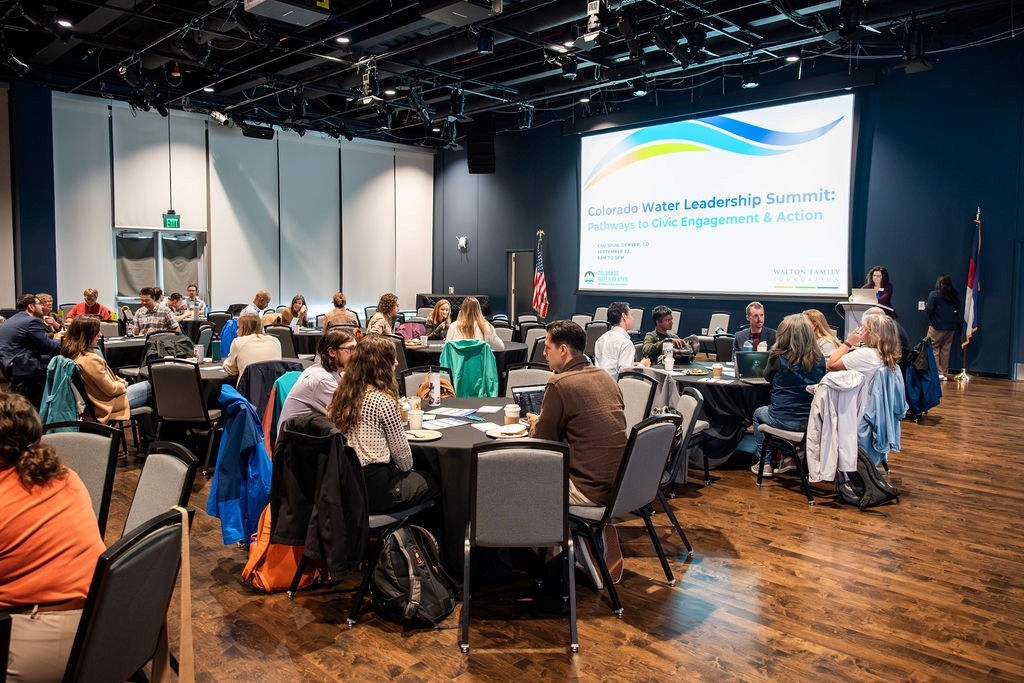
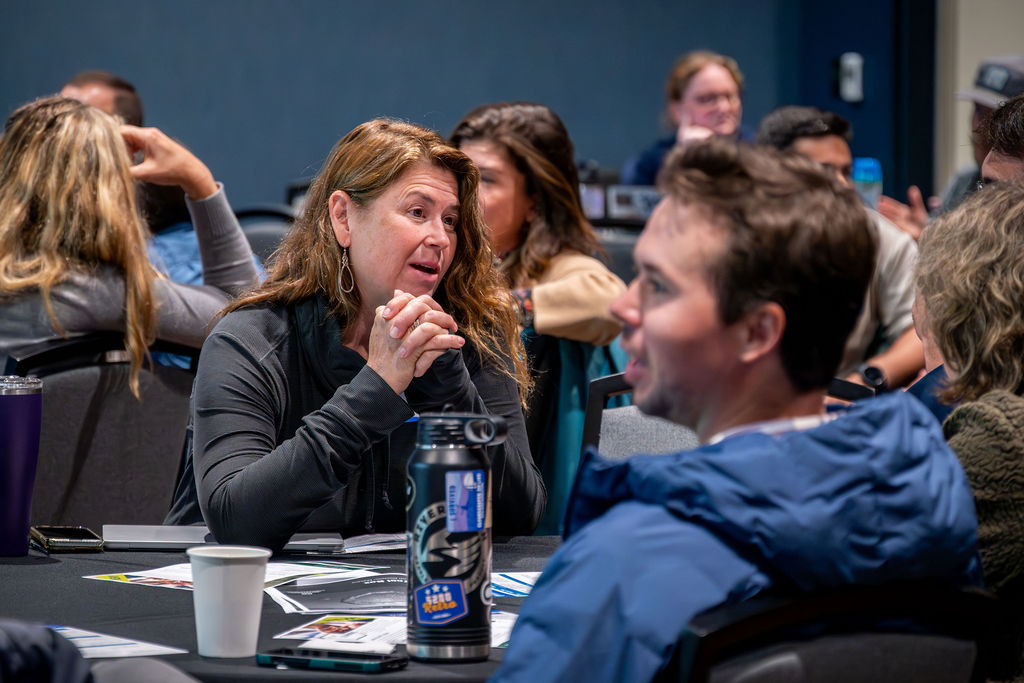
The Water Leadership Summit, hosted by the Colorado Water Center and made possible through the generous support of the Walton Family Foundation, was held on September 23, 2025, at the CSU Spur Hydro Building in Denver. The one-day event brought together more than 125 educators, policymakers, advocates, and community leaders to build the knowledge, skills, and connections needed to engage in Colorado’s water decision-making processes. Through panels, presentations, and discussions, participants explored how communication, collaboration, and civic engagement can shape Colorado’s water future.
The Summit provided real-world examples and practical strategies for those seeking to better understand how water policies are developed, how to participate in local and state decision-making, and how to effectively serve on boards and commissions that influence water planning. It also offered tools for communicating about water issues in ways that inspire action and community involvement. Designed for individuals at all levels of experience, the Water Leadership Summit empowered attendees to strengthen leadership skills, expand professional networks, and take meaningful steps toward advancing community-driven solutions to Colorado’s water challenges.
Opening Remarks: Connecting Science, Policy, and Community
Speaker:
Karen Schlatter, Director, Colorado Water Center
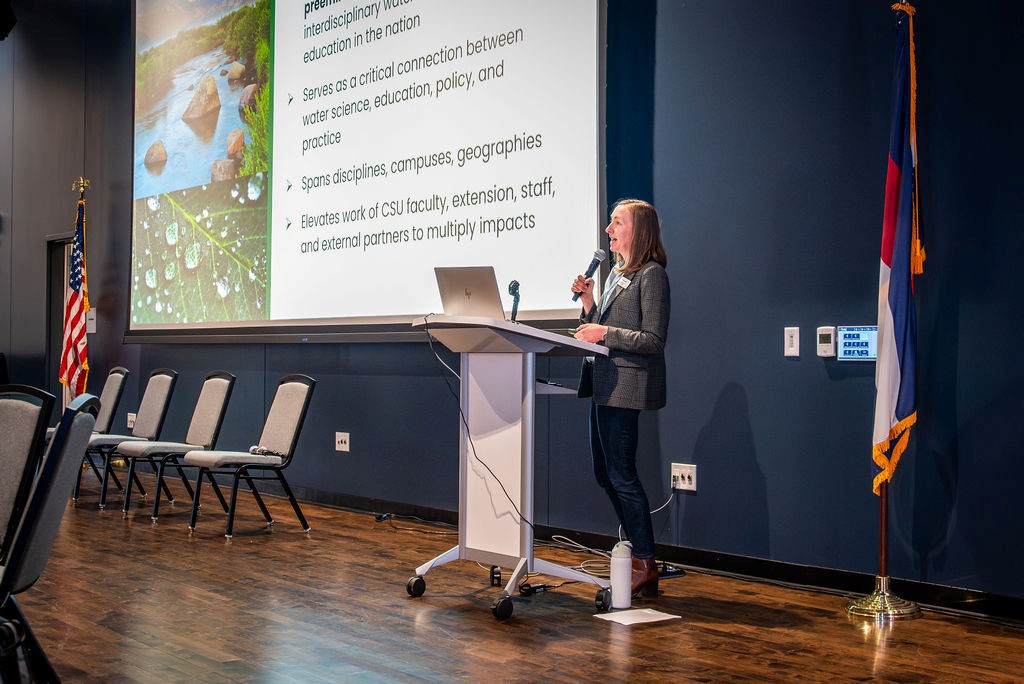
Karen Schlatter opened the summit by sharing the Colorado Water Center’s mission to promote interdisciplinary research, education, and stakeholder engagement in addressing Colorado’s complex water challenges. As the state’s designated USGS Water Resources Research Institute, the Colorado Water Center bridges science, policy, and practice across institutions and communities. Schlatter emphasized the urgent need for civic engagement in the face of climate variability, competition for scarce resources, and a retiring water workforce. She highlighted the importance of leadership development, community engagement, and collaboration in shaping Colorado’s water future.
Crafting the Message: Communicating Water Issues That Inspire Action
Moderator:
Karen Schlatter, Director, Colorado Water Center
Speakers:
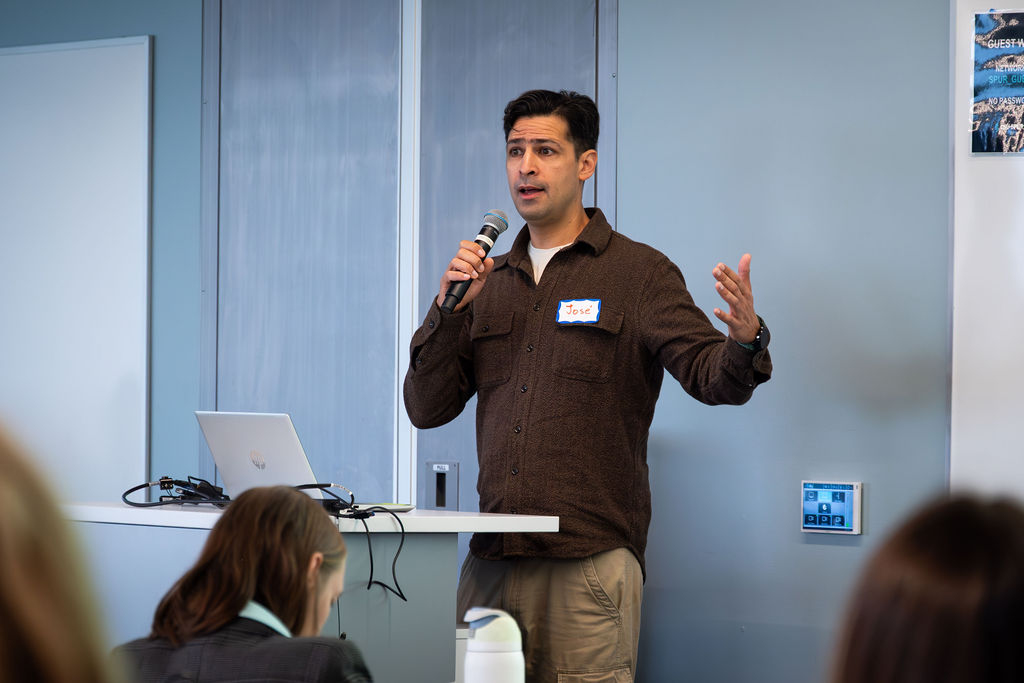
José Aranda, Senior Relationship Manager, Water Hub
Jared C. Bynum, Environmental Justice Advocate and Organizer
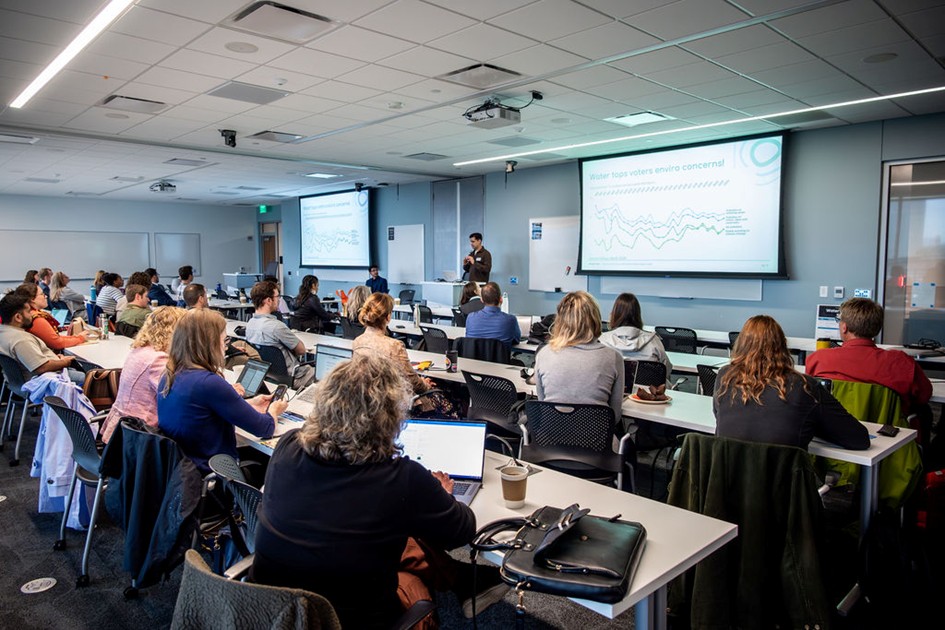
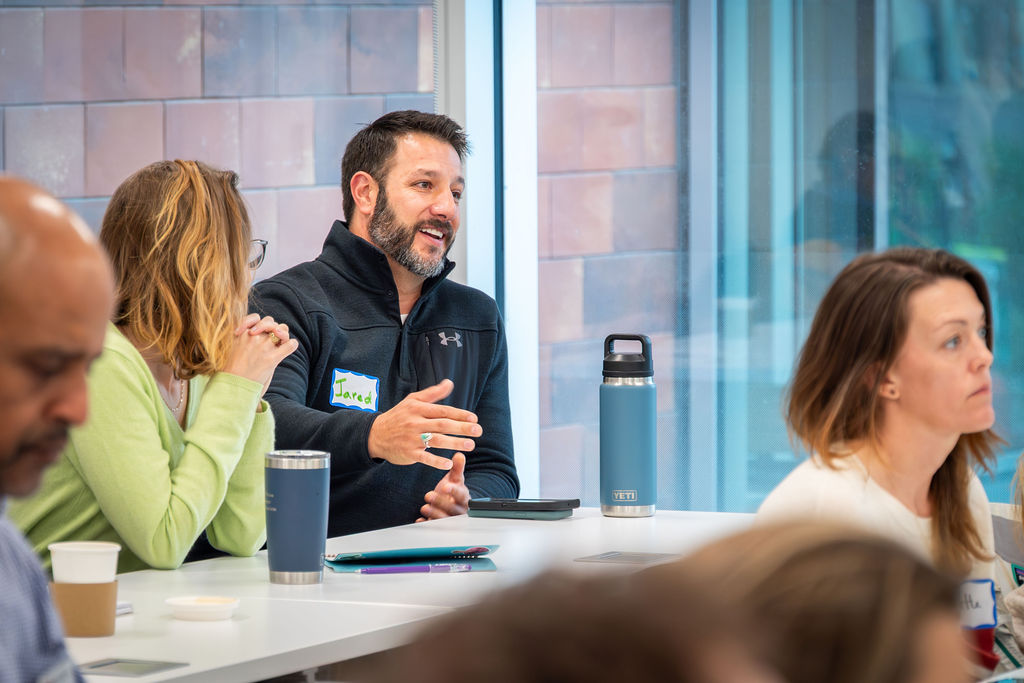
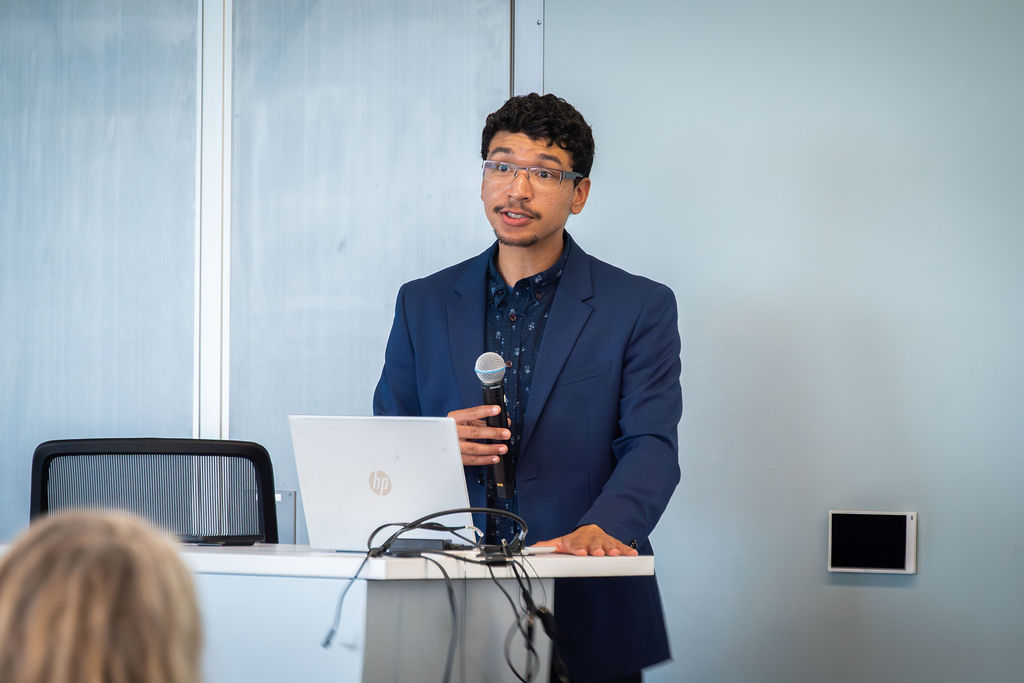
In this session José Aranda emphasized grounding messages in shared values such as family, health, and community, using clear, human-centered language to connect across political divides. He presented research showing strong bipartisan support for clean water, disaster preparedness, and nature-based solutions, and demonstrated how to apply the VPSA (Value–Problem–Solution–Action) framework. Jared Bynum highlighted the importance of both grassroots and grasstops advocacy, stressing how personal stories make policy impacts real and how building long-term trust with legislators can foster durable change. Together, the panel demonstrated that effective communication can unite communities around water issues and inspire civic action.
Resources
Slides from this session have been converted into a pdf. Simply click the button below to view/download the pdf version of slides
Colorado Water Law 101
Moderator:
Juan Pérez Sáez, Executive Director, Water Education Colorado
Speakers:
Kate Ryan, Executive Director, Colorado Water Trust)
Dr. Tom Romero, Professor of Law, University of Nevada Las Vegas
Heather Tanana (Diné), Professor of Law, University of Denver
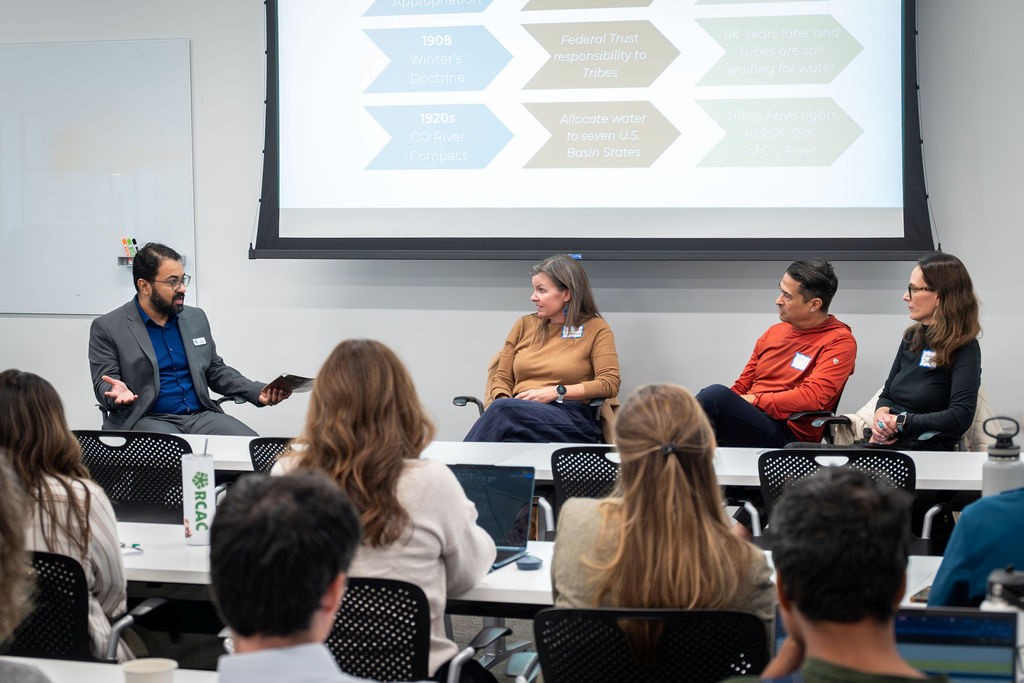
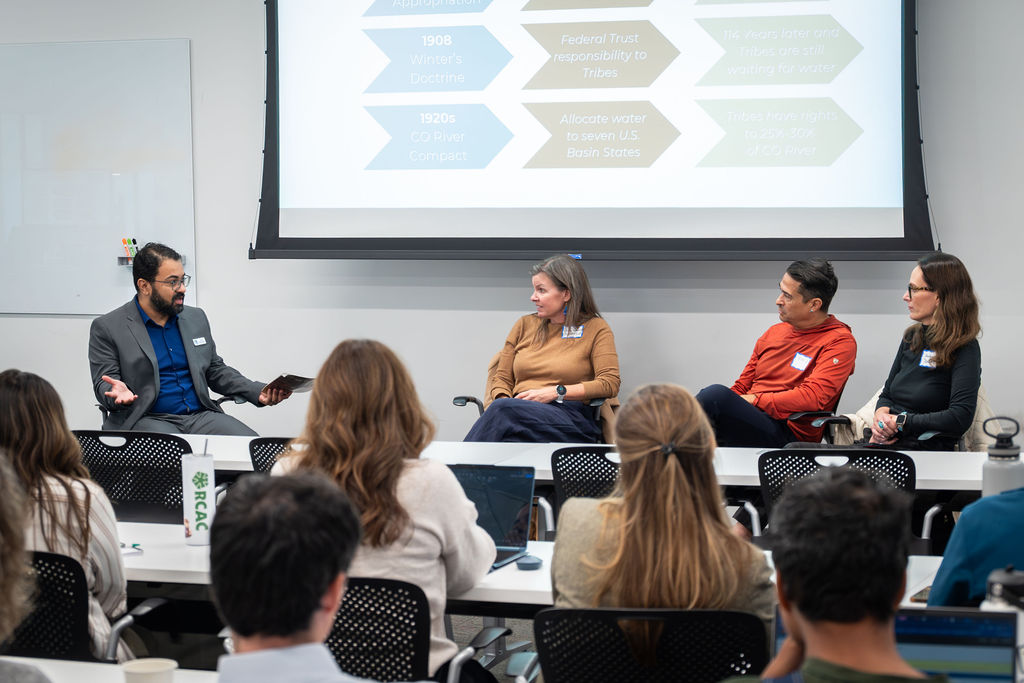
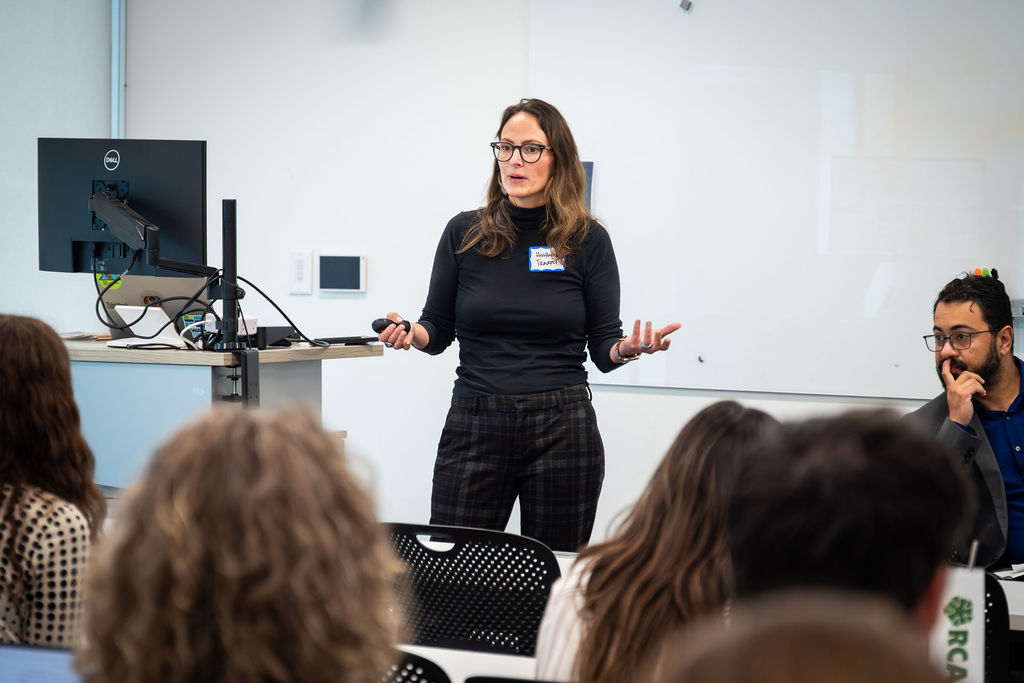
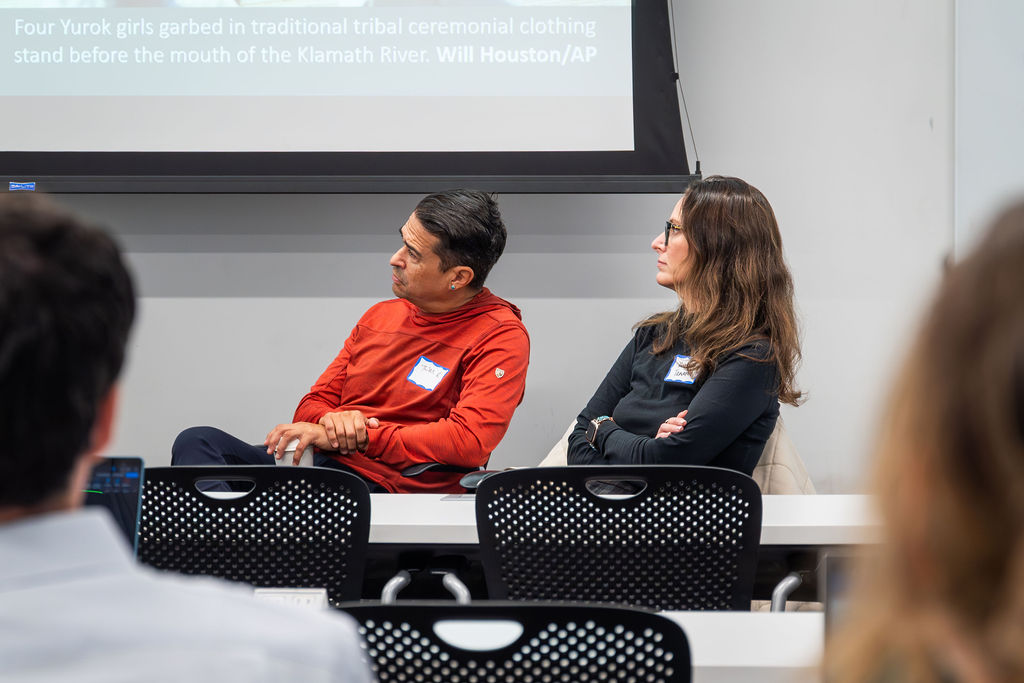
Kate Ryan traced the evolution of Colorado water law from early mining ditches and the adoption of prior appropriation in the state constitution to the development of water courts and instream flow rights. Dr. Tom Romero examined water law and policy, illustrating how communities from Flint, Michigan to Colorado’s acequia traditions have faced systemic barriers to safe, reliable water. Heather Tanana discussed tribal water rights, emphasizing the federal trust responsibility, landmark cases such as Winters v. United States, and the ongoing struggle for tribes to secure access to promised water. Together, the panel underscored the importance of understanding Colorado’s legal framework while addressing historical context and advancing water governance.
Resources
Slides from this session have been converted into a pdf. Simply click the button below to view/download the pdf version of slides
- Colorado Water Law for Nonlawyers by P. Andrew Jones and Tom Cech
- Water Law in a Nutshell, by Sandra B. Zellmer and Adell L. Amos
- The Colorado Doctrine, by David Schorr
- Linda J. Bassi, Susan J. Schneider & Kaylea M. White, ISF Law – Stories about the Origin and Evolution of Colorado’s Instream Flow Law in This Prior Appropriation State, 22 U. DENV. WATER L. REV. 389 (Spring 2019).
- A Ditch in Time, by Patricia Nelson Limerick
- ISF Law Stories – Denver Water Law Review (2019)
Civic Engagement 101: Knowing Your Representatives and Making Connections
Moderator:
Cally King, Senior Project Director, Keystone Policy Center
Speakers:
Jolie Brawner, Director of Programs, Alliance for Collective Action
Patti Schmitt, Community Development Director, Colorado State University Office of Engagement and Extension
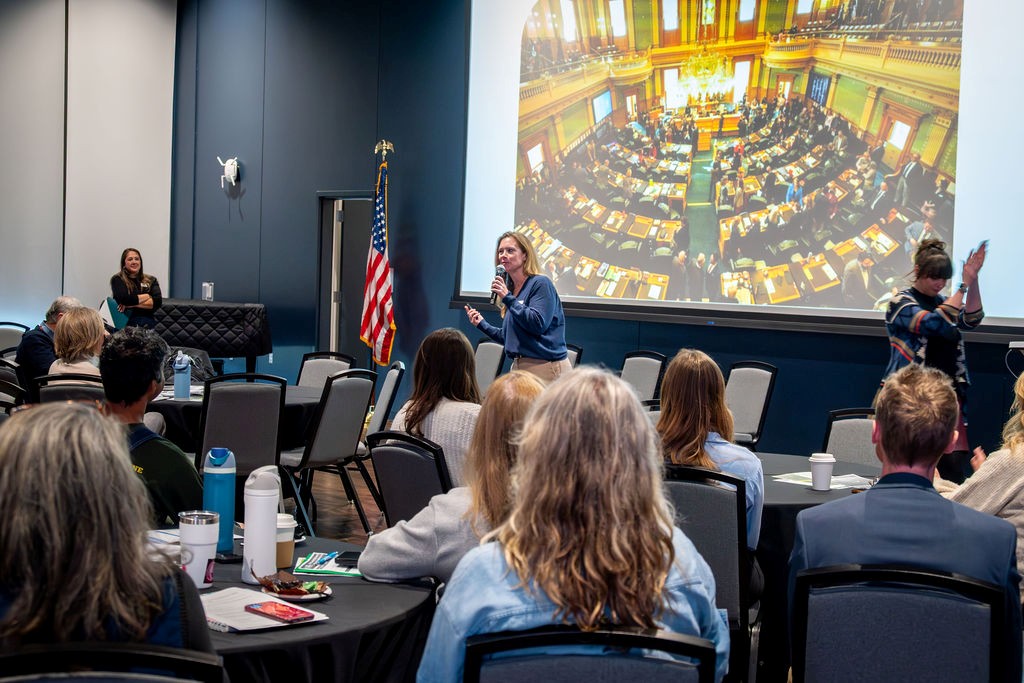
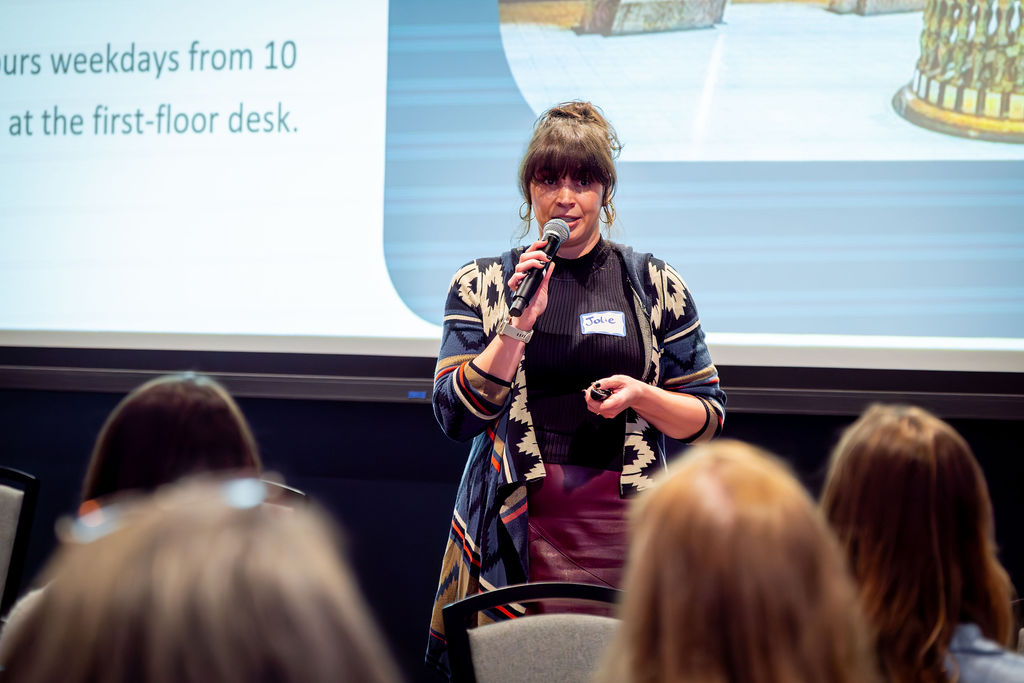
Jolie Brawner provided an overview of the Colorado Legislature, explaining how bills are introduced, debated, and passed, and shared strategies for testifying, meeting with representatives, and making voices heard at the Capitol. Patti Schmitt highlighted the community benefits of civic participation, including building social capital, strengthening trust, and countering isolation, and introduced programs such as the Family Leadership Training Institute and Civic Learning Lab. Together, the panel emphasized that leadership is accessible to everyone and built on preparation, storytelling, and relationship building.
Resources
Slides from this session have been converted into a pdf. Simply click the button below to view/download the pdf version of slides
Spotlight on Water Policy Organizations: Local to National Perspectives
Moderator:
Giselle Arroyo, Spirit of the Sun
Speakers:
Mindy Bridges, State Policy and Government Affairs Manager, US Water Alliance
Kerry Miller, Program Manager, WaterNow Alliance
Commissioner Kate Greenberg, Colorado Commissioner for Agriculture, Colorado Department of Agriculture
Nita Gonzales, River Sisters Congresso
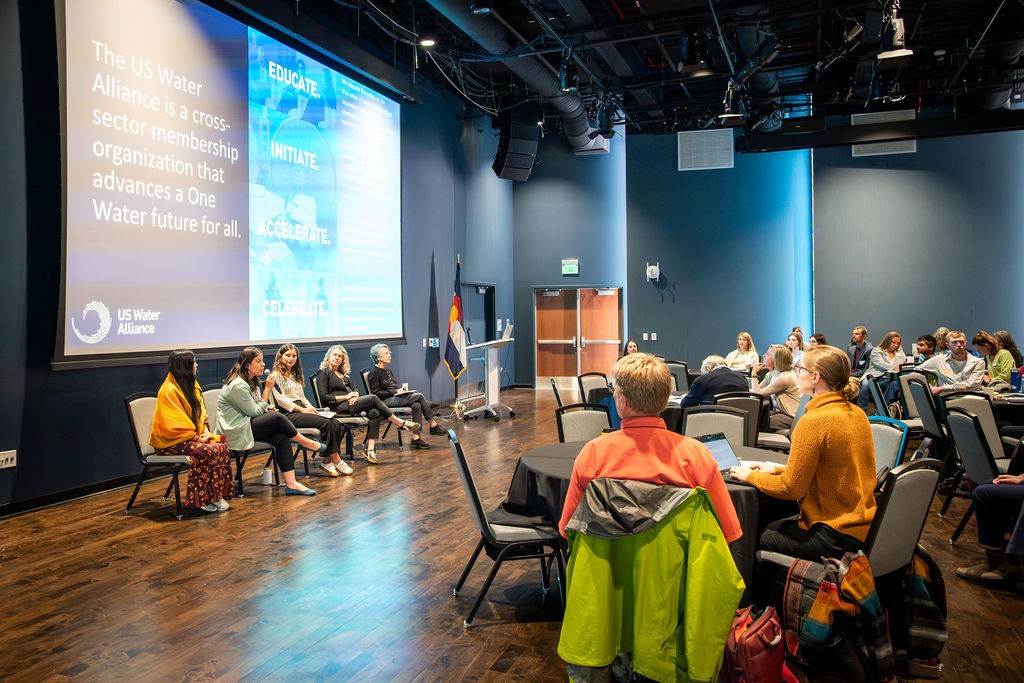
Mindy Bridges introduced the One Water approach, emphasizing integrated strategies to manage water across sectors. Kerry Miller described WaterNow Alliance programs providing technical assistance and policy tools for local governments, including the Project Accelerator and State Revolving Fund guidance. Commissioner Kate Greenberg discussed regenerative and climate-smart agriculture practices that enhance soil health and water resilience. Nita Gonzales highlighted River Sisters Congresso, an organization dedicated to stewarding the South Platte River in Denver while honoring Indigenous and Chicano/Latino heritage and advocating for the river’s recognition as a living entity. Together, the panel showed how organizations at every level are shaping policy and collaboration to address Colorado’s water challenges.
Resources
Slides from this session have been converted into a pdf. Simply click the button below to view/download the pdf version of slides
Serving on Water Boards and Commissions: Skills, Steps, and Success Stories
Moderator:
Payeton Childers, Policy Advisor, Environmental Boards and Commissions, CDPHE
Speakers:
Patricia Ferrero, Climate Justice Leadership Development Manager, Conservation Colorado
Jeff Rodriguez, Regional Water Coordination Specialist, Colorado Water Conservation Board
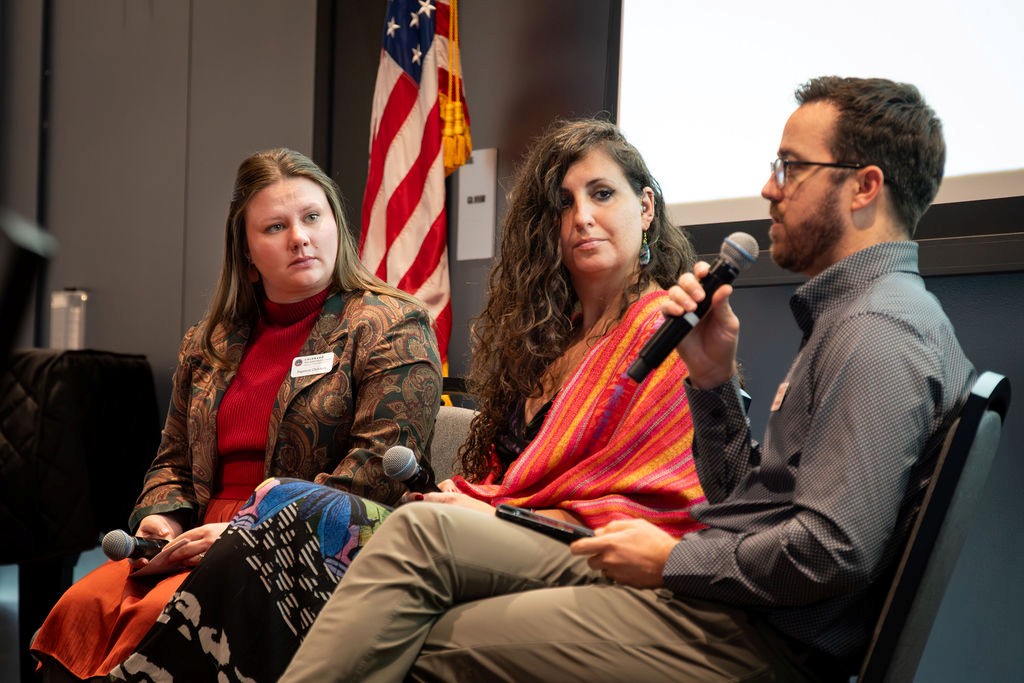
Effective leadership and representation in water governance are essential to ensuring that Colorado’s policies reflect the needs of all its communities and ecosystems. Patricia Ferrero described the Climate Justice Leadership Academy and Boards and Commissions Fellowship, programs designed to cultivate leadership and civic engagement among Coloradans from disproportionately impacted communities. She emphasized how these initiatives build participants’ skills in policy, communication, and environmental justice to prepare them for service on local, county, and state boards. Jeff Rodriguez outlined the mission of the Colorado Water Conservation Board and the role of its Basin Roundtables in advancing grassroots collaboration and local participation under the Colorado Water Plan. Moderator Payeton Childers highlighted opportunities for community involvement through Colorado’s environmental boards and commissions, noting how these platforms influence key decisions about water, conservation, and climate. Together, the panel demonstrated how community-driven leadership pathways and statewide planning frameworks are strengthening public participation and shaping Colorado’s water future.
Resources
View available toolkits, websites, and other resources related to this session.
- Colorado Water Conservation Board
- Conservation Colorado
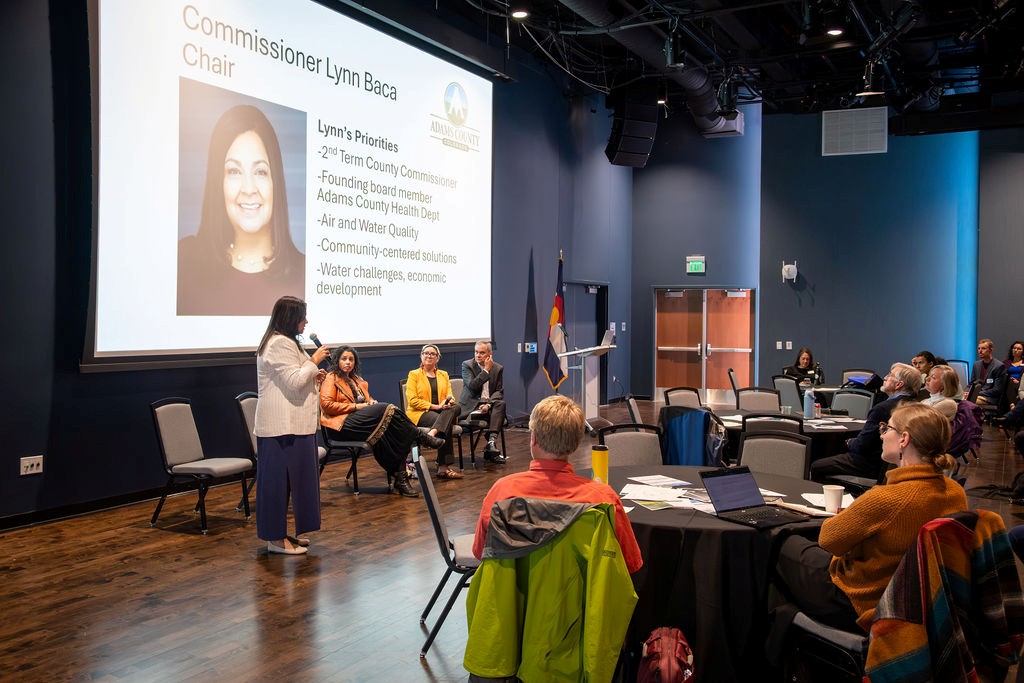
Colorado Water Leadership: Insights from Elected Officials
Moderator:
Alan Salazar CEO/ Manager, Denver Water
Panelists:
Councilmember Renée Millard-Chacon, Co-Founder of Womxn from Mountain and Commerce City Councilmember for Ward 3
Commissioner Lynn Baca, Adams County District 5
Representative Elizabeth Velasco, Colorado House District 57
The panelists agreed that climate variability poses a defining challenge for Colorado, affecting water supply, quality, and community health. They described local efforts to build resilience and ensure reliable and affordable access to clean water, linking water to broader issues such as housing, economic development, and environmental justice. The discussion also emphasized coordination across jurisdictions and integrating watershed and land-use planning. Reflecting on their experiences as Latina leaders, the panelists stressed the importance of community engagement, participation, and collaboration in water policy.
Conclusion: Building Colorado’s Water Future Together
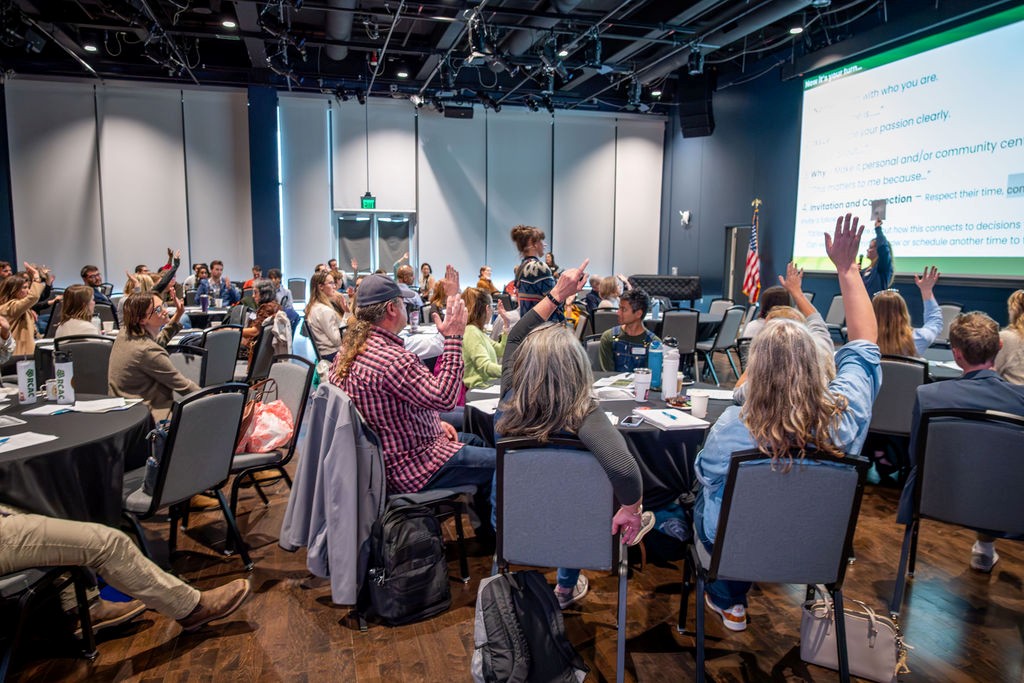
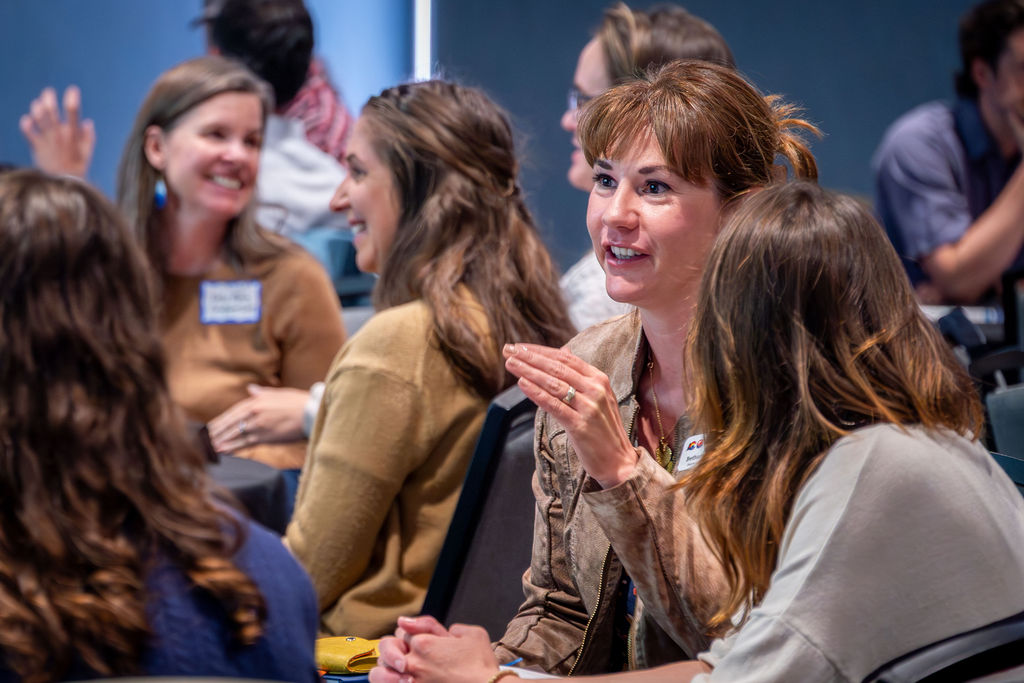
Together, these conversations revealed how leadership across disciplines, from grassroots advocates to elected officials, forms the foundation for Colorado’s shared water future. The Water Leadership Summit concluded with a shared sense of purpose and optimism. Across every session, from understanding Colorado’s complex legal frameworks to elevating community voices, communicating effectively, and engaging in policy, participants were reminded that the future of water in Colorado depends on collective leadership. As Colorado faces challenges from climate variability, population growth, and an aging water workforce, the Summit emphasized that leadership is not confined to titles or positions. Every individual, including educators, students, policymakers, advocates, and community members, has a role in advancing resilient and innovative approaches to water governance. By fostering networks of trust, shared learning, and civic engagement, the Water Leadership Summit demonstrated that together, we can shape a more informed, collaborative, and action-oriented water future for Colorado and beyond.

Questions?
Have questions about the Water Leadership Summit? Reach out to Jessica Thrasher, Senior Program Manager, for more information. We’re happy to help.