Water Leadership Summit Speaker Information
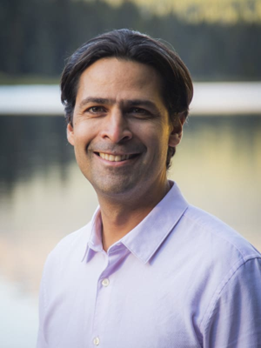
José Aranda is a water and communications professional working toward protecting Mother Earth and cultivating a deeper relationship with Water.* As Water Hub’s Relationships Manager, he advances water equity through the Color of Water initiative, which aims to give voice and visibility to Black, Indigenous, Latinx, Asian and Pacific Islanders, people of color, and LGBTQ2S+ voices often overlooked in mainstream media. Resourceful, from flying drones in the rainforest to dancing salsa with donors, José brings over a decade of experience in water and communications. Prior to joining the Water Hub, José served as Water Program Associate at the Pisces Foundation where he supported the strategic development of a national program focused on advancing a more holistic, equitable, and sustainable approach to water management. José also served as Researcher for the US Water Alliance’s Water Equity Taskforce and previously as Water Fund Coordinator for the El Triunfo Conservation Fund in Mexico.
Before joining the water and climate movement, José worked as a freelance journalist, photographer, and filmmaker for national and international outlets. José has an M.Sc. in Environmental Management from the University of San Francisco and a B.A. in Communications from Universidad Iberoamericana in Mexico City.
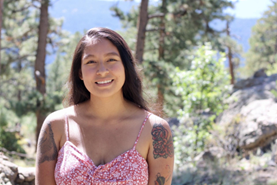
Giselle Arroyo (she/they) is a committed advocate for youth, collective liberation, and other climate/social justice movements. She’s a proud mother, raising two members of our newest generation. Giselle identifies as Chicana, Mexican, and Ecuadorian. She feels passionate about uplifting voices from all historically underrepresented communities. Understanding the role that colonialism has played in accelerating climate chaos, Giselle remains invested in challenging systems rooted in patriarchy and capitalism that put our communities at risk. Feeling a deep appreciation for the natural world, she enjoys being in relationship with the land through hiking, gardening, and spending quality time with her loved ones outside.
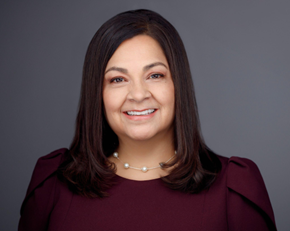
Commissioner Lynn Baca is a second-generation Adams County resident who grew up in Brighton, Colorado, and she is the first Latina Asian Pacific Islander to be elected to the Board of County Commissioners. She currently serves as Board chair in 2025. Her grandfather was a farmer in unincorporated Adams County, which influenced her to advocate for farmland preservation, open space, and outdoor recreation. Growing up in Brighton, Commissioner Baca watched Adams County grow from a bustling farming community to home of a world class medical center and Colorado Air and Space Port.
Commissioner Baca served two terms on the Brighton City Council. As a council member she served in leadership positions on several regional boards, including the Denver Regional Council of Governments, North Area Transportation Alliance, Smart Commute Metro North, and the Adams County Sub-Regional Transportation Committee, all which impact Adams County residents as the county continues to grow. She has also served on local boards, including liaison to the Greater Brighton Fire Protection District and the Brighton Farmland Preservation Sub-Committee. Commissioner Baca currently serves on the following board/committees: Mile High Flood Control District, Boundary Control Commission, Adams County Water Quality Association, North Area Transportation Alliance, Airport Coordinating Committee, Regional Economic Advancement Partnership, Brighton School District 27J Capital Fees Foundation, Rocky Mountain Partnership/Policy and Legislative Advisory Network, Highway 7 Coalition, Aerotropolis Regional Transit Authority, Asian/American Chamber of Commerce, Colorado Counties, Inc., County & Commissioners Acting Together, Child Welfare Allocation Committee, Metro Area County Commissioners, and National Association of Counties.
As Adams County Commissioner for District 5, Commissioner Baca will advocate for hard-working families; economic growth and primary employment; open space, farmland preservation, and outdoor recreation; and safe streets, including complete sidewalks and maintenance efforts.
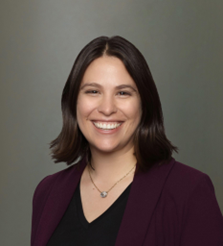
Mindy Bridges is the State Policy and Government Affairs Manager at the US Water Alliance, a national nonprofit organization advancing policies and programs that build a sustainable water future for all. She leads the Alliance’s state policy engagement and works across programs to support government affairs. Prior to joining the Alliance, Mindy worked at the National Conference of State Legislatures for over ten years. There, she focused on environmental and agricultural policy research and developing nonpartisan educational resources for policymakers. She also convened states and Native American Tribes with the federal government to address issues related to environmental cleanup. She has a dual BA in anthropology and ecology & evolutionary biology from the University of Colorado at Boulder. Outside of work, Mindy enjoys cooking, spending time with her dog and family, and training for short-distance triathlons. She loves living in her hometown of Denver.
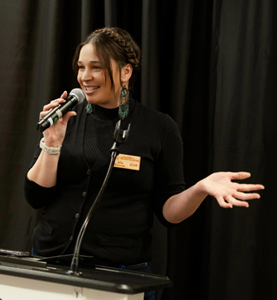
Jolie Brawner is a civic leader and community builder with over a decade of experience helping Coloradans navigate and influence public decision-making. She currently serves as Director of Programs for the Alliance for Collective Action, where she leads efforts to build connections, elevate community voices, and open pathways for meaningful participation in shaping policy and systems change. Her commitment to inclusive leadership extends to statewide service, including her appointment to an Environmental Justice seat on Colorado’s Produced Water Consortium, where she brings community perspectives into complex water policy discussions
She also served as Vice Chair of the Colorado Independent Congressional Redistricting Commission, where she traveled the state to engage residents, expand access, and champion fair representation. From facilitating grassroots collaborations to co-creating statewide conversations on food and water policy, Jolie’s work is grounded in strengthening connections between communities and their representatives.
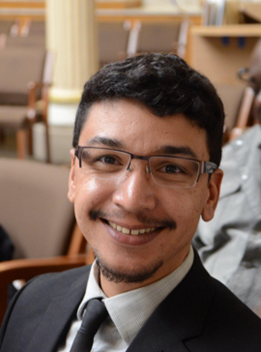
Jared is an environmental justice advocate and community organizer in Denver, Colorado. He works to advance programs that increase access to the outdoors, fights for policies to conserve nature and halt climate change, and advances efforts to lift up the voices of underrepresented communities at the State Capitol and in decision making spaces around the state. In his free time, he serves on the boards of several political advocacy and environmental organizations, and enjoys finding new coffee shops, backpacking, and exploring Denver’s mountain parks.
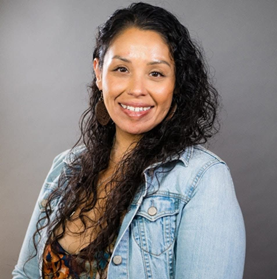
Renée Millard-Chacon, Co-Founder of Womxn from the Mountain a womxn founded indigenous non-profit focused on environmental justice in Commerce City, Denver, and Colorado for disproportionately impacted communities helping pass the Environmental Justice Act in CO. Co Chair on the Equity Analysis of Cumulative Impacts subcommittee and member of the Environmental Justice Action Taskforce for the Colorado Department of Health and Environment, currently on the RTD Accountability Committee, and currently Commerce City Council Womxn for Ward 3.
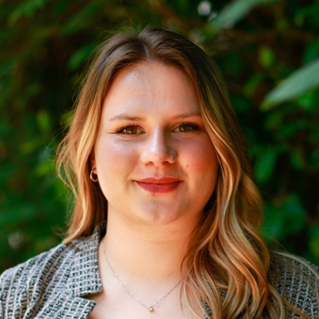
Payeton Childers serves as a policy advisor for Colorado’s Environmental Boards and Commissions. She provides policy, legislative, and regulatory support to the decision-making bodies that set standards and regulations in Colorado, including the Water Quality Control Commission. Her background spans air and water quality, tenant law, and natural resource management, giving her a unique perspective on how policy shapes lives and ecosystems.
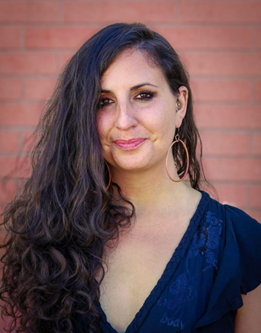
Patricia studied psychology at Boston University, and then she wandered around the world for a few years to grow her passion for and knowledge of intersectional social justice issues by teaching English in Thailand, working as a program coordinator in a non-profit in Guatemala, and bartending in Mexico. She thrives in multicultural spaces that center innovation and creativity to tackle White supremacy culture through the storytelling and expertise of those most impacted.
In 2015 she began a Public Health Certificate program at the Colorado School of Public Health, which brought her to Protégete at Conservation Colorado. She has dedicated the last decade of her career to the creation of leadership pathways that will diversify decision-making spaces, dismantle systemic barriers and oppressive power structures, and ensure a reciprocal relationship between our communities and Madre Tierra. She is currently finalizing her Master’s in Public Health and leading the Climate Justice Leadership Academy
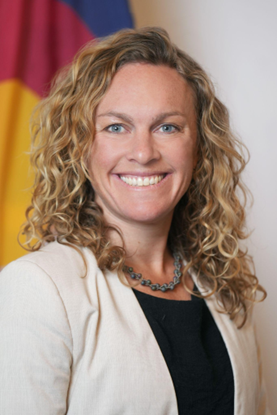
Kate Greenberg is the first woman to serve as Colorado Commissioner of Agriculture. She was appointed by Governor Jared Polis in December 2018 to provide leadership and direction to the Colorado Department of Agriculture.
Since then, she has served as president of the Western U.S. Agricultural Trade Association and the Western Association of State Departments of Agriculture, and as a board member of the National Association of State Departments of Agriculture. Prior to her role as Commissioner, Greenberg advocated for federal farm policy with the National Young Farmers Coalition out of Durango, Colo., worked to restore Mexico’s Colorado River Delta, and worked as a first generation farmer on various farm operations across the West.
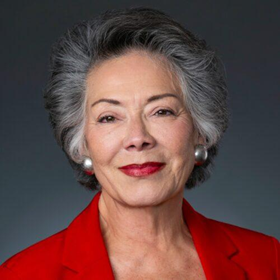
Nita Gonzales is a nationally recognized Chicana leader, educator, and advocate who has spent decades advancing racial equity, cultural preservation, and community empowerment in Denver and across the Southwest. Through her consulting firm, Nuevo Amanecer, LLC, she works at the intersection of education, social justice, and environmental stewardship, supporting organizations and communities in building strategies rooted in cultural values and lived experiences.
She currently serves as a leading force behind the River Sisters Congreso, a collective dedicated to the healing and protection of the South Platte River and its watershed. The Congreso weaves together Indigenous, Chicano/Mexicano, and community voices to shape policies, advocate for environmental justice, and honor traditional ecological knowledge.Nita’s work reflects the mission of the upcoming Summit: to educate, encourage, and empower local community members, especially those who care deeply about their communities, to engage in decisions regarding water. Her leadership with River Sisters Congreso exemplifies how grassroots organizing can bridge cultural wisdom and modern policy frameworks.
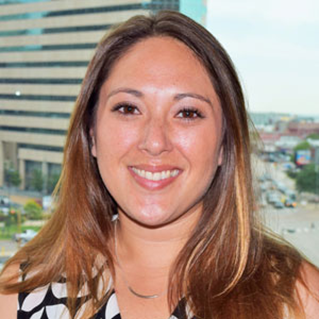
Cally has over 15 years of experience working with state and local governments on legislative and policy processes. As a Senior Project Director with Keystone Policy Center she designs, manages and facilitates projects on a wide range of topics related to state and local government planning, public finance, strategic planning, natural resources, economic development, community economic transitions, outdoor recreation, and more. She is a leader in Keystone’s work on equitable access and management for public lands and she works statewide to provide leadership training within Colorado’s tourism industry. Prior to joining Keystone, she worked in state government as legislative liaison and policy advisor for Colorado Governor John Hickenlooper and in local government at the City & County of Denver as a legislative assistant in the Mayor’s Office. Cally holds a Master of Public Administration from the University of Colorado – Denver focused on public policy and local government and a B.A. in political science and speech communications from Colorado State University.
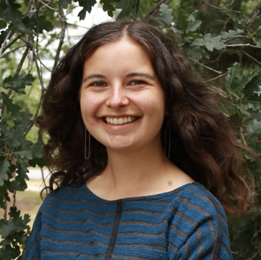
Kerry Miller is a Program Manager at WaterNow, where she partners with communities to advance sustainable, equitable, and locally driven water solutions. Her work centers on supporting resilient water management through hands-on technical assistance, strategic planning, funding navigation, and leadership development. Kerry holds a Master of Urban and Regional Planning from the University of Colorado Denver.
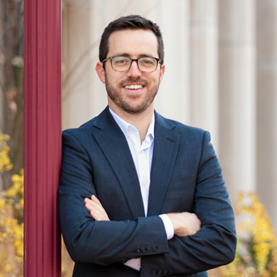
Jeff Rodriguez is a member of the Colorado Water Conservation Board’s (CWCB) Water Supply Planning Section. His team is directly responsible for writing and updating the Colorado Water Plan. Jeff serves as the CWCB representative to the nine basin roundtables and coordinates much of the agency’s stakeholder engagement through these roundtables and the Interbasin Compact Committee. His work focuses on supporting the development of grassroots water planning and incorporating it into state-level policy.
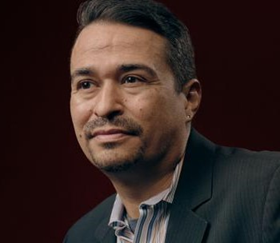
Dr. Romero is the Director of the Interdisciplinary Research Incubator for the Study of (in)Equality and a Professor of Law at the William S. Boyds School of Law at the University of Nevada Las Vegas. The author of numerous articles, book chapters, and essays and long-time faculty member at the University of Denver, Dr. Romero is one of the nation’s leading experts on the legal, social and political history of race relations in Colorado and the larger Rocky Mountain West. His work recently has also focused on the relationship of this history to current challenges around water inequity. Dr. Romero published an article exploring the use of racial impact statements in the work of water municipalities and is working on several projects related to the past history and current challenges of immigration and water law. Those projects include a book chapter that examines the intersection between developments in water and immigration law in the late 19th and early 20th centuries and a community based participatory research project on water access and water quality issues impacting a Latinx neighborhood in Denver, Colorado. Dr. Romero received his Ph.D and J.D. from the University of Michigan and is an undergraduate alum of the University of Denver.
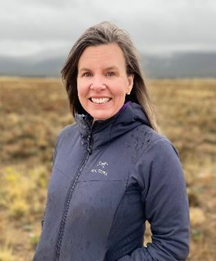
Kate is a water lawyer who joined the Water Trust in 2018 and was appointed as Executive Director in 2023. She began practicing as an attorney after clerking for the Honorable Gregory Hobbs. In private practice, the very first case she took through water court was pro bono for the Colorado Water Trust’s Three Sisters Ditch project on Hermosa Creek. Kate’s past clients included farmers, ranchers, municipalities, landowners, and, as an Assistant Attorney General, the CWCB and the State and Division Engineers. She has litigated successfully for her clients in multiple trials, and prevailed in Colorado Supreme Court arguments. Before going to Berkeley Law, she obtained a master’s degree in geography at the University of Colorado and worked as an associate scientist at the National Snow and Ice Data Center, studying Colorado snowpack to inform satellite-based remote sensing data products.
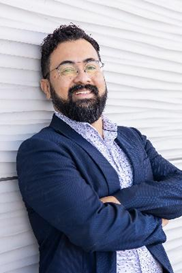
Juan brings two decades of experience in water conservation and environmental advocacy to the role. Before joining WEco, he served as Executive Director for Environmental Learning for Kids (ELK), a Denver-based nonprofit focused on educating youth through outdoor experiences and service learning. His previous roles include working with The Wilderness Society, where he managed strategic partnerships, and Conservation Colorado, where he led the Protégete Program, engaging Latino communities in natural resource issues. Originally from Panama, Pérez Sáez holds a Master’s in Natural Resources from Ohio State University. He is actively involved with the Colorado Office of Outdoor Recreation and serves as the Chair for The Governor’s Commission on Community Service among various other boards focused on community service and conservation.
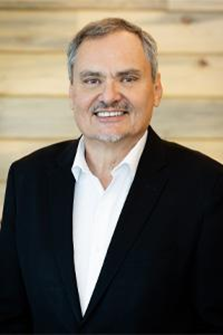
Alan Salazar, who became Denver Water CEO/Manager in August 2023, was born in Leadville, Colorado, and is a fifth-generation Coloradan. His family traces its roots to the historic San Luis Valley and throughout the West Slope. He grew up in the Denver metro area and is a graduate of the University of Colorado Boulder, where he earned a bachelor’s degree in history and political science. He has a law degree from the University of Colorado School of Law, where he studied water law, mining law, natural resources law and public lands issues. Salazar has a storied career involving decades of public service in Colorado. As chief strategy officer for former Colorado Gov. John Hickenlooper, Salazar oversaw policy, legislative and communications staff for the governor’s office and was involved in overseeing energy and natural resources policy, including the creation of the first Colorado Water Plan, which serves as the state’s framework for solutions to Colorado’s water challenges. He also served as chief of staff to U.S. Rep. (and later U.S. Sen.) Mark Udall. Prior to that, Salazar served as deputy chief of staff and policy director for Colorado Gov. Roy Romer and state issues director for U.S. Sen. Tim Wirth. He started his career on the Colorado staff for U.S. Sen. Gary Hart. Prior to joining Denver Water, Salazar served as chief of staff for former Denver Mayor Michael B. Hancock. There, he oversaw operations for 24 city agencies. In his six years with the city, he has been intimately involved with Denver’s growth, density, infrastructure and resource planning.
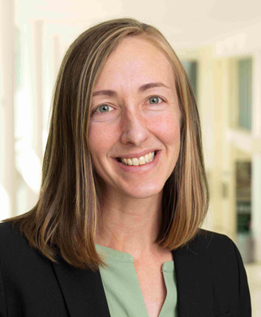
Karen Schlatter was appointed director of the Colorado Water Center at Colorado State University in 2025, after joining the Center as associate director in 2023. Schlatter brings academic, nonprofit, and public sector experience in managing complex water challenges with a deep commitment to building partnerships and the ability to engage in conversations across Colorado’s water community. She joined CSU from the University of Florida Water Institute where her work included facilitating multi-stakeholder/academic teams to achieve shared goals around water management through collaborative, interdisciplinary research. Prior to her role at UF, she served as associate director of the Colorado River Delta Program at the Sonoran Institute, where she focused on building cross-sector and international partnerships to support large-scale ecological restoration, effective binational water management, and community engagement in the Colorado River Delta region. Schlatter earned a Bachelor of Science in biology from McGill University and a Master of Science in environmental studies from the University of Colorado Boulder. She served as an agricultural extension volunteer in the Peace Corps in Paraguay.
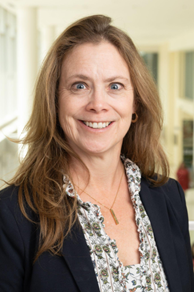
Patti Schmitt is the Community Development Director for the Office of Engagement and Extension at Colorado State University, which has a presence in nearly every county across Colorado. In this role, she partners with communities—especially in rural areas—to address complex social, health, economic, and safety challenges. She also serves as Director of the Family Leadership Training Institute (FLTI) of Colorado, a nationally recognized, evidence-based program housed at CSU Extension. FLTI equips community members with the skills and confidence to collaborate with decision-makers in addressing local issues. Its mission is to bridge the gap between policymakers and residents, ensuring that diverse voices are included in shaping community priorities. At the heart of Patti’s work is fostering belonging and connection, building the resilience of Colorado communities, and creating pathways for residents to lead lasting change.

Heather Tanana (Diné) is a law professor at the University of Denver. She is also an associate faculty member with the Center for Indigenous Health at Johns Hopkins University School of Public Health. Heather’s research interests revolve around the intersection of environmental and health policy. Much of her work focuses on tribal water issues, from climate change impacts to Colorado River management. She also leads the Universal Access to Clean Water initiative, which seeks to bring awareness to the lack of clean, safe, and reliable drinking water in Indian country and to make tangible progress on securing water access for all tribal communities. http://tribalcleanwater.org
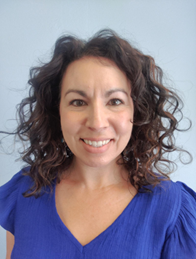
Jessica leads initiatives on water quality, access, and workforce development. She holds a B.A. in Sociology from Southern Methodist University and an M.A. in Anthropology from Colorado State University. At the Colorado Water Center, she directs the Colorado Water Fellows Program, expands access to water resources, and develops tools to advance inclusion across the water sector. She is committed to collaboration and innovation to ensure diverse perspectives shape a sustainable water future.
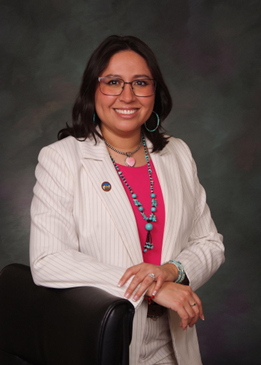
Representative Elizabeth Velasco represents House District 57 in western Colorado. She is the first Latina to represent the western slope and the first Mexican-born immigrant in the state legislature. Rep. Velasco grew up in the Vail Valley working in the service industry to pay for her education and support her family. She understands first-hand the struggles and dynamics of the rural resort working class. Before getting elected, she ran an interpretation and translation agency for almost 10 years and became a wildland firefighter and public information officer. The lack of action from previous representatives to solve the ongoing challenges in her community led her to run for office. In her first term, she passed groundbreaking legislation to protect residents of mobile home parks, expand language access in emergency response, improve wildfire resilience in the state, and hold big polluters accountable. She currently serves as the house majority co whip and co-chairs the Colorado Democratic Latino Caucus and the Wildfire Matters interim committee. Rep. Velasco is a strong voice for supporting working families, protecting natural resources, and adapting to a changing climate in western Colorado.
Questions?
Have questions about the Water Leadership Summit? Reach out to Jessica Thrasher, Senior Program Manager, for more information. We’re happy to help.